Every punter who has ever looked at a price has made the same quiet assumption: the odds mean something. A $3.00 chance implies a one-in-three probability. A $10.00 chance implies a 10% shot. The maths is clean, the logic feels sound, and most of the time nobody bothers to question it.
Here's the problem. Bookmaker odds are not probabilities. They are prices. And prices lie.
Not maliciously. Not illegally. But systematically, structurally, and profitably — the odds you see on your screen do not represent the bookmaker's true estimate of a horse's chance. They represent a commercial position that embeds margin, manages liability, and reflects strategic positioning against other bookmakers and the betting public.
If you treat odds as probabilities, you are building your entire betting framework on a false foundation. This article dismantles that assumption and rebuilds your understanding from the ground up.
What Punters Think Odds Are
The conventional wisdom goes like this. Decimal odds of $4.00 mean a 25% chance. You invert the number. One divided by four equals 0.25. Simple. If a bookmaker prices a horse at $4.00, they are saying it wins one time in four.
This is called implied probability. The formula is straightforward:
Implied Probability = 1 ÷ Decimal Odds
So far, so good. The maths is correct. The interpretation is not.
When a punter sees $4.00 and thinks "25% chance," they are assuming the bookmaker has no interest in the outcome beyond accurately pricing the race. They are assuming the price is neutral. They are assuming the bookmaker wants to be "right."
Bookmakers don't want to be right. They want to be balanced.
What Odds Actually Are
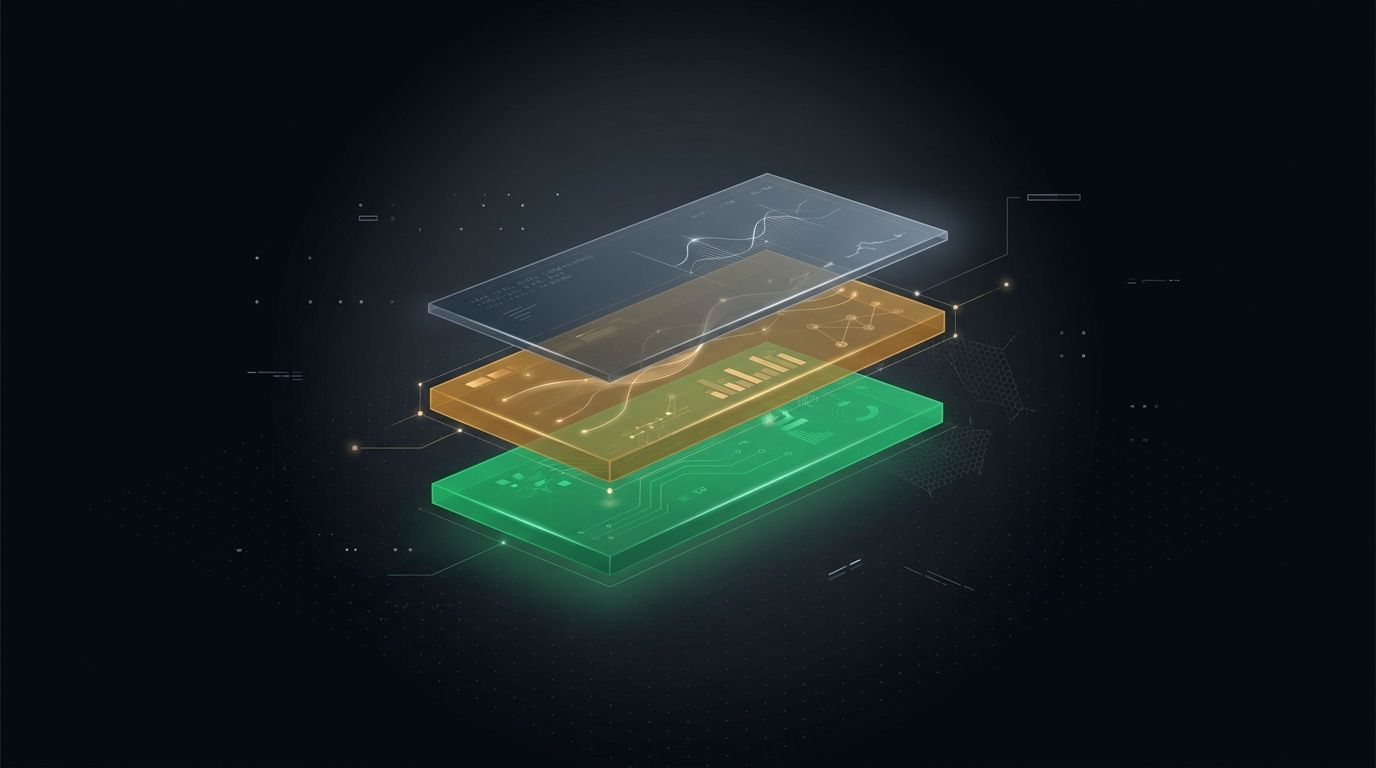
A bookmaker's price is a commercial instrument with three layers:
- An estimate of true probability — the bookmaker's genuine assessment of the horse's chance, derived from form analysts, algorithms, market intelligence, and price monitoring.
- A margin layer — the overround or vig, which ensures that if equal money is bet on every runner, the bookmaker profits regardless of the result.
- A positioning adjustment — deliberate deviations from the "true" price to attract or deter bets on specific runners, manage liability, and respond to market movements.
The odds you see are the sum of these three components. They are not a probability estimate. They are a price designed to generate profit while managing risk.
Consider a six-horse race at Randwick. The bookmaker's internal traders might assess the true probabilities as follows:
| Runner | True Probability (Trader Estimate) | Fair Odds |
|---|---|---|
| 1 | 35% | $2.86 |
| 2 | 25% | $4.00 |
| 3 | 18% | $5.56 |
| 4 | 12% | $8.33 |
| 5 | 7% | $14.29 |
| 6 | 3% | $33.33 |
The probabilities sum to 100%. The fair odds represent a no-margin market. If the bookmaker offered these prices and balanced the book, they would break even.
Here's what the bookmaker actually publishes:
| Runner | Published Odds | Implied Probability |
|---|---|---|
| 1 | $2.50 | 40.0% |
| 2 | $3.50 | 28.6% |
| 3 | $4.50 | 22.2% |
| 4 | $7.00 | 14.3% |
| 5 | $12.00 | 8.3% |
| 6 | $26.00 | 3.8% |
The implied probabilities now sum to 117.2%. That extra 17.2% is the overround — the bookmaker's margin. Every runner's price has been compressed downward (its implied probability inflated) to create that margin.
Runner 1 was fairly priced at $2.86. You are offered $2.50. Runner 2 was fairly priced at $4.00. You are offered $3.50. The bookmaker is not saying these horses have higher chances than the traders estimated. The bookmaker is saying: we need to charge a premium on every runner to ensure we win.
This is the critical distinction.
Odds don't reflect probability. They reflect probability plus margin plus positioning.
The Anatomy of a Bookmaker Price
To visualise what's happening, imagine a bookmaker price as three stacked layers:
┌─────────────────────────────────────┐
│  Positioning Adjustment             │  ← +2% to favourite (liability hedge)
├─────────────────────────────────────┤
│  Margin (Overround / Vig)           │  ← +17.2% across the field
├─────────────────────────────────────┤
│  True Probability Estimate          │  ← The actual 100% market
└─────────────────────────────────────┘
The bottom layer is what the bookmaker genuinely believes. The middle layer is the tax you pay for the privilege of betting. The top layer is tactical — moving a price to attract money on a longshot, shortening a favourite because the house is already exposed, or shadowing a competitor's line.
When you invert odds to get implied probability, you are measuring the entire stack. You are not isolating the true probability. You are looking at a price and calling it a prediction.
It is not.
Why Bookmakers Don't Set Odds to Reflect True Probability
If bookmakers wanted to express their genuine probability estimates, they would publish fair odds. They do not, for three reasons.
First, margin is the business model. A bookmaker without overround is a charity. The margin ensures that even with perfect information and balanced books, the operator profits. In Australian racing, typical overrounds range from 115% to 130% depending on field size, race grade, and bookmaker type. That isn't incidental. It's structural.
Second, liability management overrides accuracy. If the public piles onto a hot favourite at Flemington, the bookmaker may shorten that horse's price below its true probability estimate to reduce exposure. They are not updating their belief about the horse's chance. They are defending their balance sheet. The price moves, but the underlying probability has not changed.
Third, prices are set relative to competitors. Bookmakers monitor each other's lines constantly. If one corporate opens a runner at $4.50 while the market is $4.00, that price isn't necessarily a bold probability statement. It may be a promotional position, a slow adjustment, or a deliberate loss-leader to acquire customers. The odds reflect market dynamics, not independent assessment.
The Implied Probability Trap
The trap is seductive. You see $3.00, you calculate 33.3%, and you ask yourself: does this horse win one in three times? If your own analysis says yes, you bet. If it says no, you pass.
But your analysis is competing against the wrong number. The bookmaker's true estimate might be 38% (fair odds $2.63) with a margin-inflated published price of $3.00 (implied probability 33.3%). In this scenario, the published odds understate the true probability — the horse is a better chance than the price suggests.
Or the true estimate might be 28% (fair odds $3.57) with margin pushing the published price to $3.00. Now the odds overstate the chance — the horse is worse than the price implies.
You cannot tell which scenario applies without knowing the margin and the bookmaker's underlying estimate. The implied probability alone tells you nothing useful about edge. It only tells you what the price says — and the price is engineered to deceive.
This is why professional punters do not price bets by inverting odds and comparing to their own probability. They work in fair odds space. They strip the margin first. Then they compare.
Real-World Example: A Saturday Metro Field
Take a competitive Saturday race at Caulfield — a Benchmark 78 over 1400 metres with twelve runners. One major corporate publishes the following early market:
| Runner | Odds | Implied Probability |
|---|---|---|
| Favourite | $3.20 | 31.3% |
| Second pick | $4.80 | 20.8% |
| Third pick | $6.50 | 15.4% |
| Fourth pick | $9.00 | 11.1% |
| Remaining eight runners | $15.00–$51.00 | 21.4% combined |
The total implied probability is 120%. The overround is 20%.
A punter who inverts the favourite's $3.20 and thinks "31.3% chance" is ignoring the 20% tax embedded across the entire market. The bookmaker's true estimate for the favourite is almost certainly closer to 26–27%, which would imply fair odds around $3.70–$3.85. The published price of $3.20 contains at least 50 cents of margin.
If you believe the favourite is a 30% chance, the implied probability of 31.3% tells you to lay the horse. But the fair probability of ~26.5% tells you to back it. Same opinion. Opposite action. The difference is whether you are reading the price or reading the probability.
What This Means for Your Betting
Once you accept that odds are not probabilities, every price you see becomes a question rather than a statement. The question is not: what chance does the bookmaker give this horse? The question is: what price am I being charged, and what is the fair price underneath?
This reframing is the foundation of everything that follows in this series. Before you can calculate overround, de-vig a market, estimate fair odds, or identify positive expected value, you must stop treating odds as neutral probability estimates. They are commercial prices with margin baked in and bias layered on top.
Key Takeaways
- Bookmaker odds are prices, not probabilities. They contain margin, liability adjustments, and competitive positioning.
- Implied probability (1 ÷ odds) measures the published price, not the true chance.
- The overround is the gap between the sum of implied probabilities and 100% — the bookmaker's built-in profit margin.
- You can't identify value by comparing your estimate to implied probability. You must work with fair odds.
- Every price is stacked layers — true probability at the bottom, margin in the middle, positioning on top.
See It on Real Prices
You don't need a spreadsheet to feel this. EVSTREAM strips the margin from every bookmaker's price in real time — the fair-odds line updates every 0.4 seconds across every bookie and every code, so you're always reading the probability underneath the price, not the price on top.
Open the grid and watch raw prices and de-vigged fair odds sit side by side. Or start your 7-day free trial and build your own fair line against the whole market.